
Psychonauts is a game that has some fairly outstanding pedigree. It’s one of those cult classics which have become deeply rooted in nostalgia for a great many people, partly because the original supposedly underperformed commercially and partly because there haven’t been a billion sequels to beat the idea to death. It fits into a niche group of games from the late 90s and early 2000s that have retained a significant cult popularity despite the supposedly low sale figures, where there’s always someone who will tell you that is their favourite childhood game.
It’s also somewhat unfortunate then given that I never actually played the original Psychonauts. Perhaps that’s a positive thing though, given that it means I am approaching the sequel with no attached nostalgia. Arguably it means I’m missing some context, but I did make sure to watch a plot summary on YouTube before I got started.
In a way the cult aspect of the game makes Psychonauts 2 feel like a game that deserved to be made. Throughout the whole thing, there is this sense that this is a story that developers, Double Fine, wanted to tell and wanted to complete, but just didn’t really have the resources to do so until now. Even with only the context of the recap cinematic and the YouTube summary video, the setting of Psychonauts 2 and the plot feels like an extremely natural continuation of the plot of the original, like this is something that was always planned and has only now been realised. This makes the game feel like a bit of an underdog, which I think makes one feel quite charitably towards it.
In Psychonauts 2, you play as Raz who is fresh from a summer camp for psychic children (the setting of the first game) and has joined the Psychonauts, an organisation of psychic super-spies. The game starts literally right where the last Psychonauts game (a short VR endeavour which essentially just filled the gap after the first one) left off, so I can only imagine that for old fans it will feel like no time at all has passed.
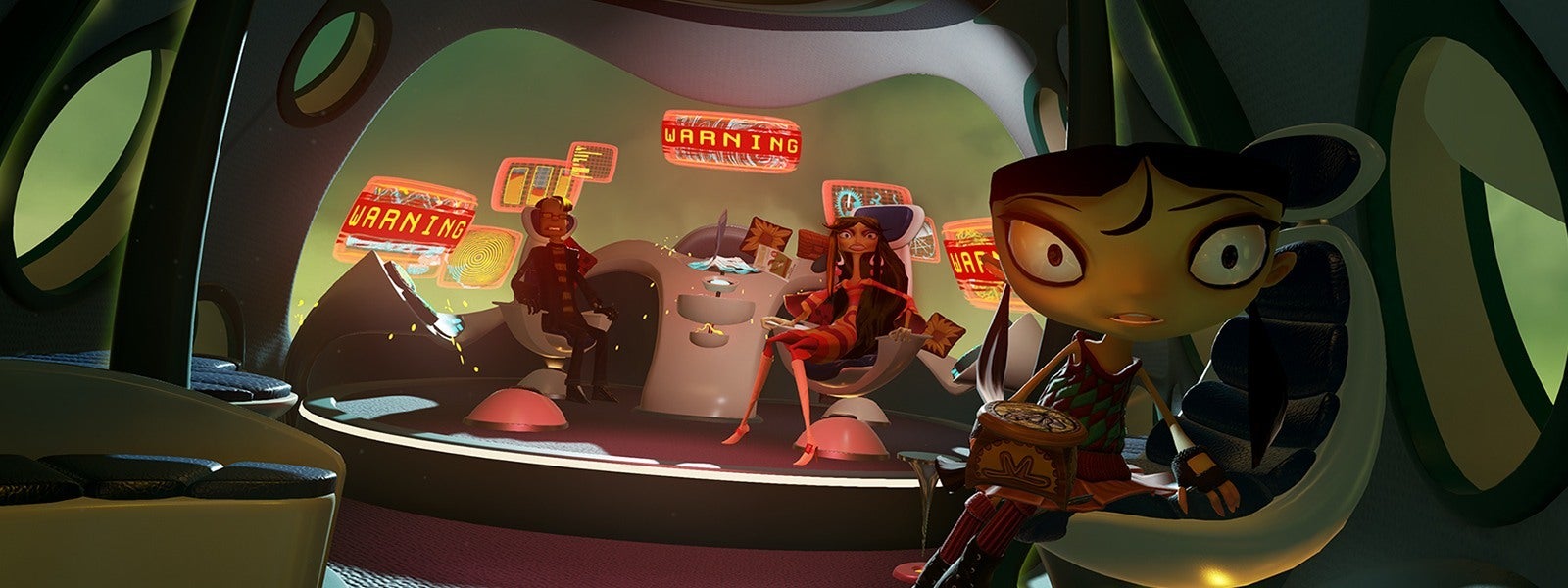
Raz now must prove himself to the Psychonauts organisation, one that he hero-worships, and along with that must begin the work of uncovering a mole within the organisation plus discover more about the history of the spies, which is tied to the history of his own family (a troupe of travelling circus performers who despise psychics and have ostracised Raz because of his own psychic abilities). The setting is unquestionably just a tad silly, but given the way it leans into this, in a Saturday-morning cartoon sort of way, makes it endearing more than anything else.
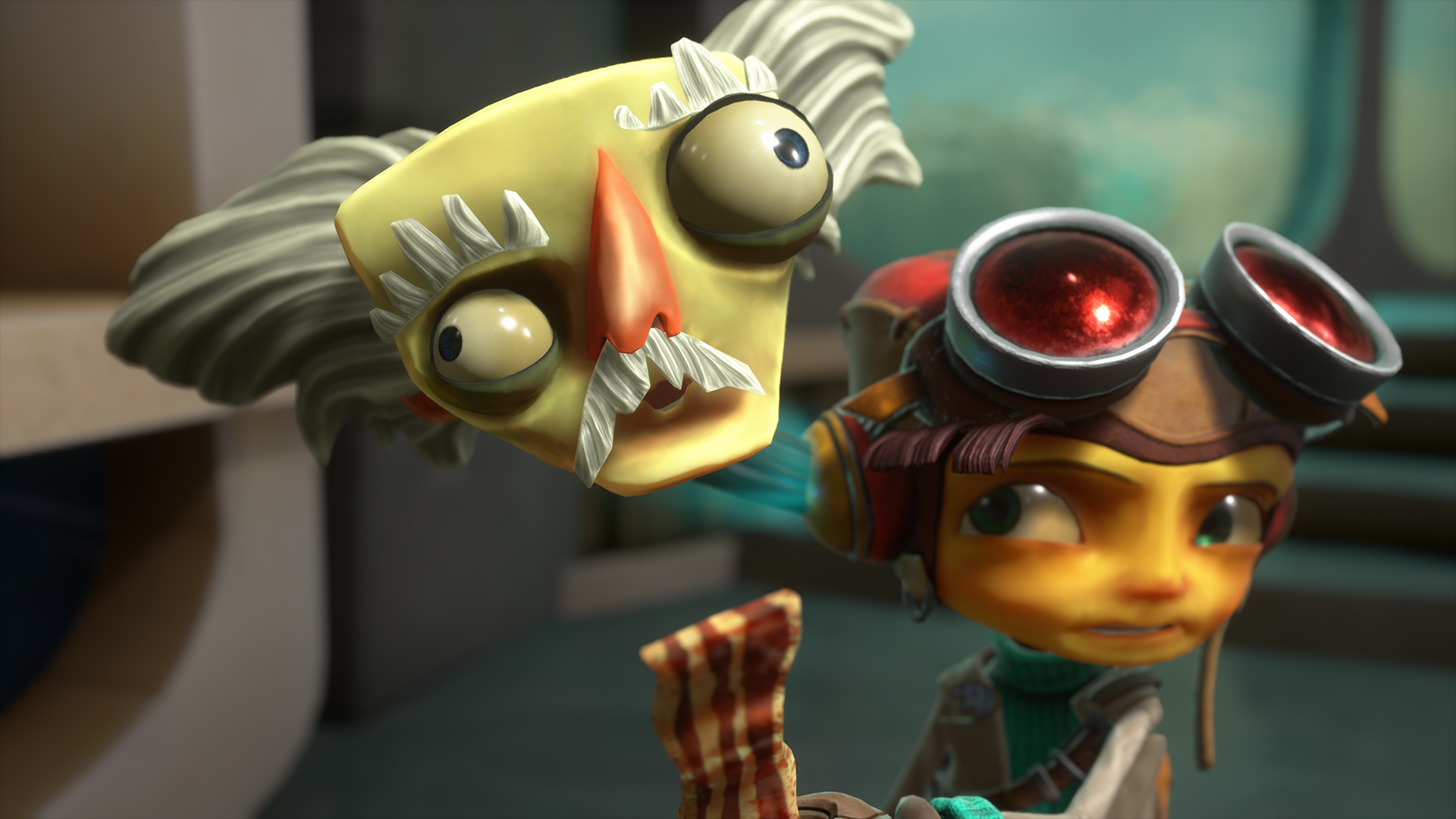
The first thing to really clobber you over the head is the aesthetic of the game. Character models all have a vibe of having been sculpted in plasticine and then left to melt slightly. It’s extraordinarily unique, quirky, and visually interesting. It’s also often genuinely rather ugly. It’s a weird thing to say given that the in many cases it even feels like many of the characters are designed to be deliberately ugly, but either way I have to admit I just wasn’t the biggest fan of it. Despite disliking it, I can also admit that the design is super unique and memorable, which might well be the point, it’s more about making everything stick out in your memory rather than blur together with a bunch of other brown and grey, triple-A open-world snoozefests. Environments are also often extremely nicely designed and presented with crazy architecture to fit the exaggerated and highly-stylised feel of the characters.
The central aspect of Psychonauts is that the main levels of the game occur when you enter the minds of different people. In entering someone’s mind you get transported to a totally different worlds, with insane and vivid representations of each individual’s character. From the mad dentist whose mind is disturbingly toothy and gummy (and honestly, just a bit gross), to the library mind of the hyper-organised and book-smart researcher and then the mind which has the extremely neurotic and anxious Psychonaut placed centre stage on a game show, a metaphor for his own neuroses and dislike of being the centre of attention.
Between different levels you can explore hub worlds in reality and interact with various characters, find collectibles and do side-quests, but the real meat of the game is in these different minds. As they all take place inside different people’s heads it means that the normal rules of reality do not apply. Physics often have no real bearing, there are characters which range from paper cut-outs to gigantic automatons, enemies are all various aspects of self-doubt, self-censorship and other “brain-themed” baddies. Also, via exploration you can learn more about the memories, history and traumas of the individual whose mind you are in.
There is absolutely no question that there is some incredible imagination on display (pun intended?). The different minds are all basically insane (sometimes literally) to experience and constantly have you excited to see what you’ll discover next. There is that real feeling of everyone is different and perceives the world in different ways because the insides of their minds are so vastly unlike each other. This variety and imagination also makes wanting to see the rest of the game a big part of what drives one to complete it.
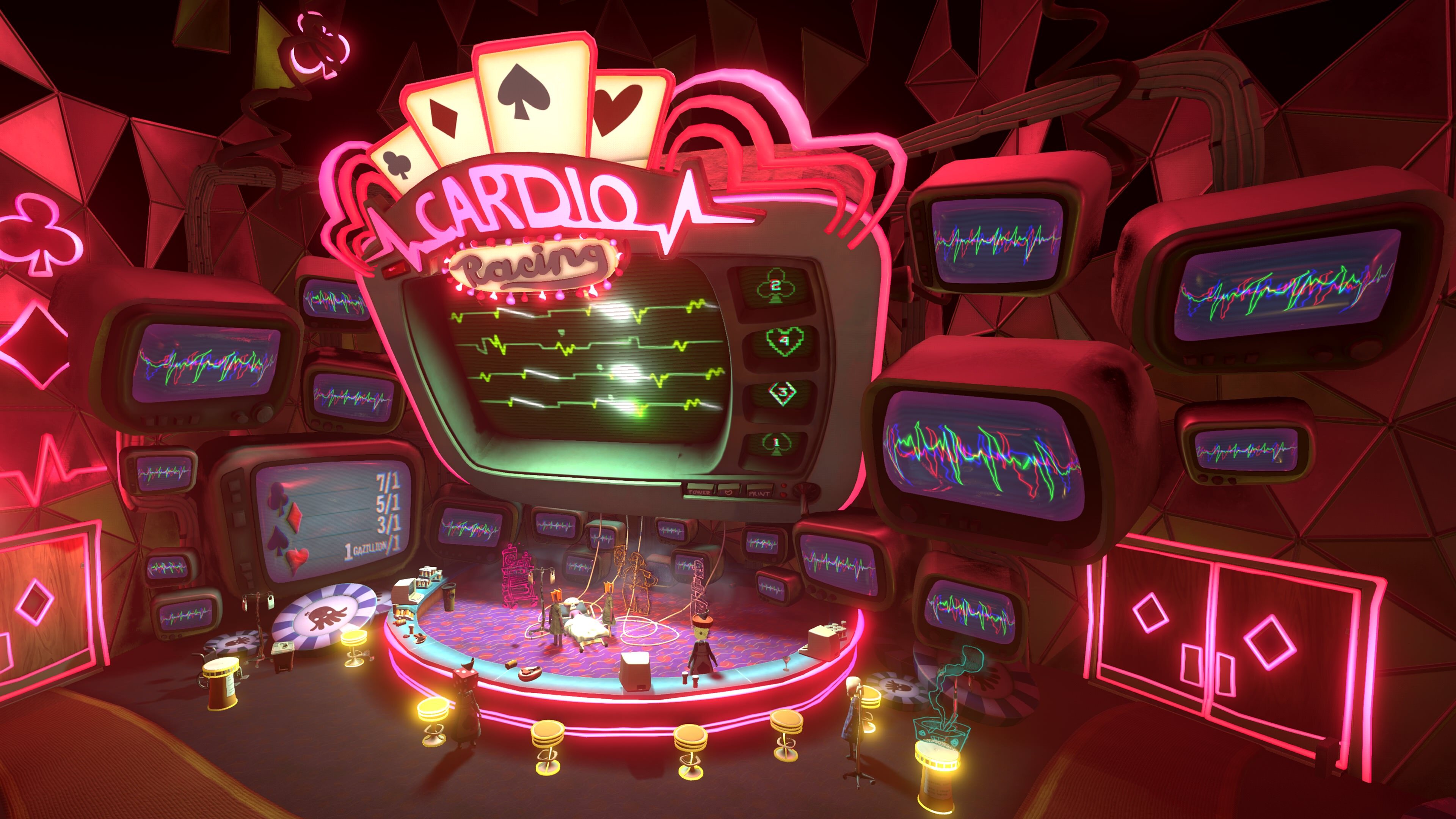
Of course, with such a broad range of types of things to experience, there is also a fairly large range of quality. Some of the missions, such as those of the fractured mind of one recurring character and the game show I mentioned are genuine highlights, while other missions like the aforementioned library really just dragged on-and-on. The visuals of each mission are all extremely striking and vibrant, but there is also the unfortunate downside that given the extremely stylised nature of the game these environments can also grate on the eyes because of jarring colour-schemes and overly saturated worlds.
One particular example which comes to mind is a mind set in a music festival, all about the rediscovering one’s senses and how overwhelming it would be to go from zero sensory input to far too much. As an aside, it is also about as obviously about taking drugs as possible without ever actually mentioning drugs. That mission was quite simply so bright and garish that it genuinely hurt my eyes a little to play it and a mission which was around 1.5-2 hours in length took me three separate play sessions to complete.
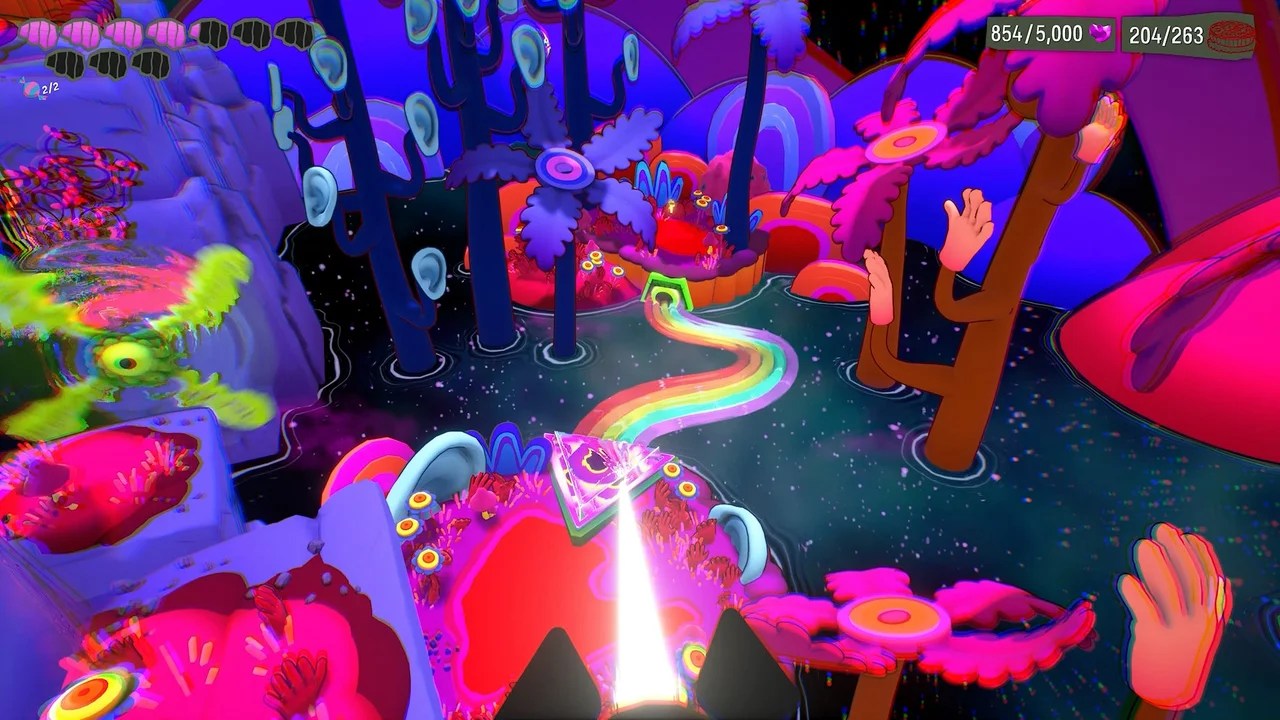
All of this is to come back to what I said earlier. I don’t know if “beauty” is precisely what Double Fine were aiming for in their vision for Psychonauts 2, as much as it was designing something which was visually interesting and striking.
I feel like this attitude applies to an awful lot of aspects of the game design in fact, for example much of the game is based around platforming puzzles using Raz’s various psychic traversal powers, but the game also seems to do its best to keep things fresh and interesting by at times using fixed camera angles, and the style of the platforming you have to perform. The downside there is that once again there are often surprisingly janky aspects. One example which stands out is that it is sometimes weirdly difficult to accurately perceive depth in the game. Jumping onto ropes (for tightrope walking) or catching the paper-thin figment collectibles was sometimes surprisingly hard because I would try to jump at them only to juuuuust fly past them.
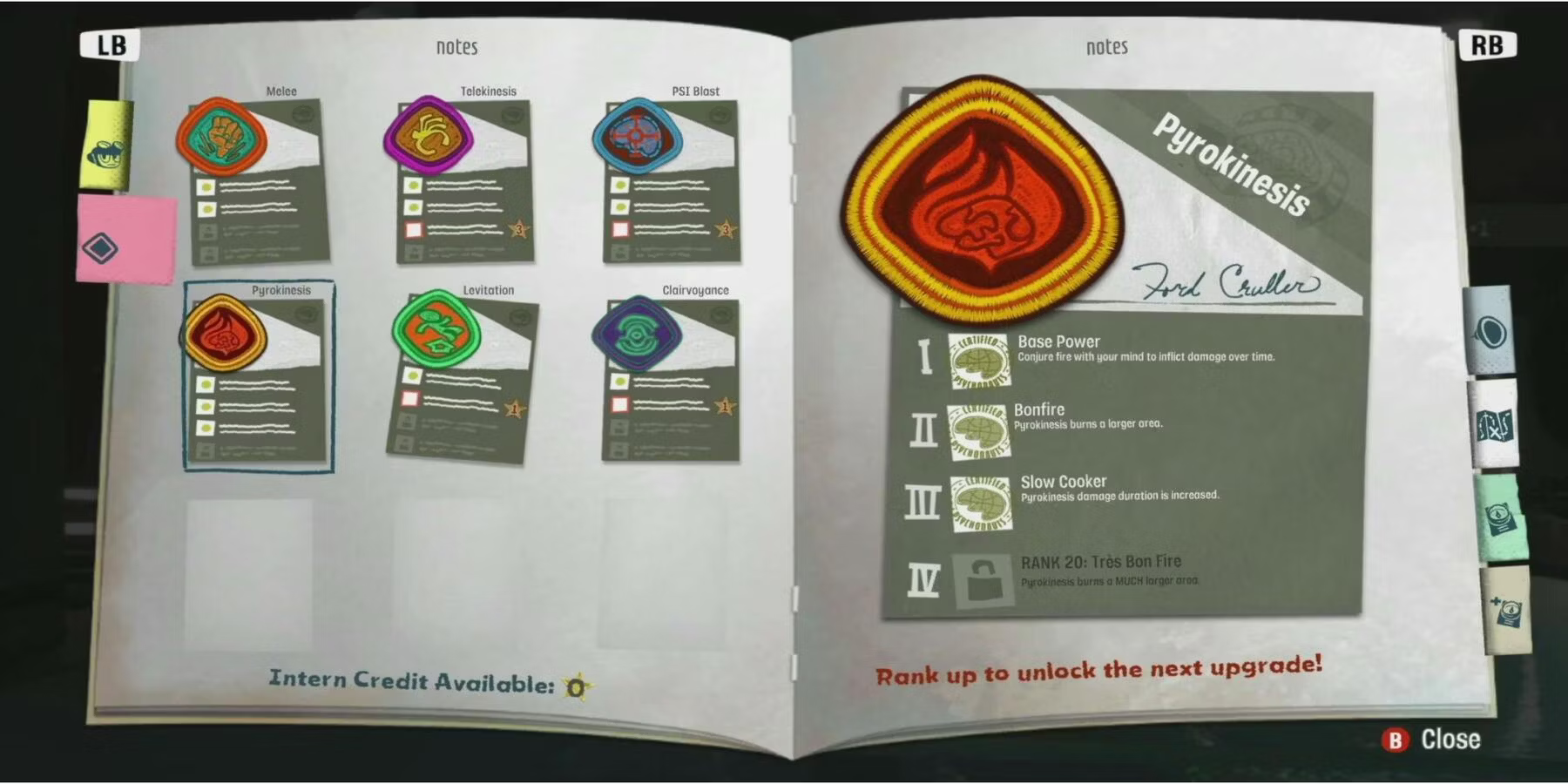
On the subject of powers, it is these same traversal abilities which Raz uses in combat, which is kinda neat. The ability which allows you to grappling hook towards specific points can be used to drag enemies towards you, the fire bomb can be used to burn away paintings and reveal hidden passages, the time bubble ability can be used to both slow down enemies and also moving platforms and then the PSI blast ranged attack can be used… As a ranged attack… Okay some are less about traversal, but for the most part every ability has a use both inside and outside of combat and that’s just good game design.
The combat itself is broadly a 3rd-person beat-em-up style, with you jumping around the place using your various psychic powers to burn and blast your enemies, slow-down time, avoid projectiles and occasionally just whacking them in the face. This actually never stopped being fun across the game, and consistently felt pretty satisfying. With my one major hang-up there being that the enemy variety felt a little lacking across all the various interesting locales. There were also a few exciting boss fights which were highlights of the game in their own right. The combat did sometimes suffer from the same jank that I felt infected the platforming, but it remained more on the side of fun than annoying.
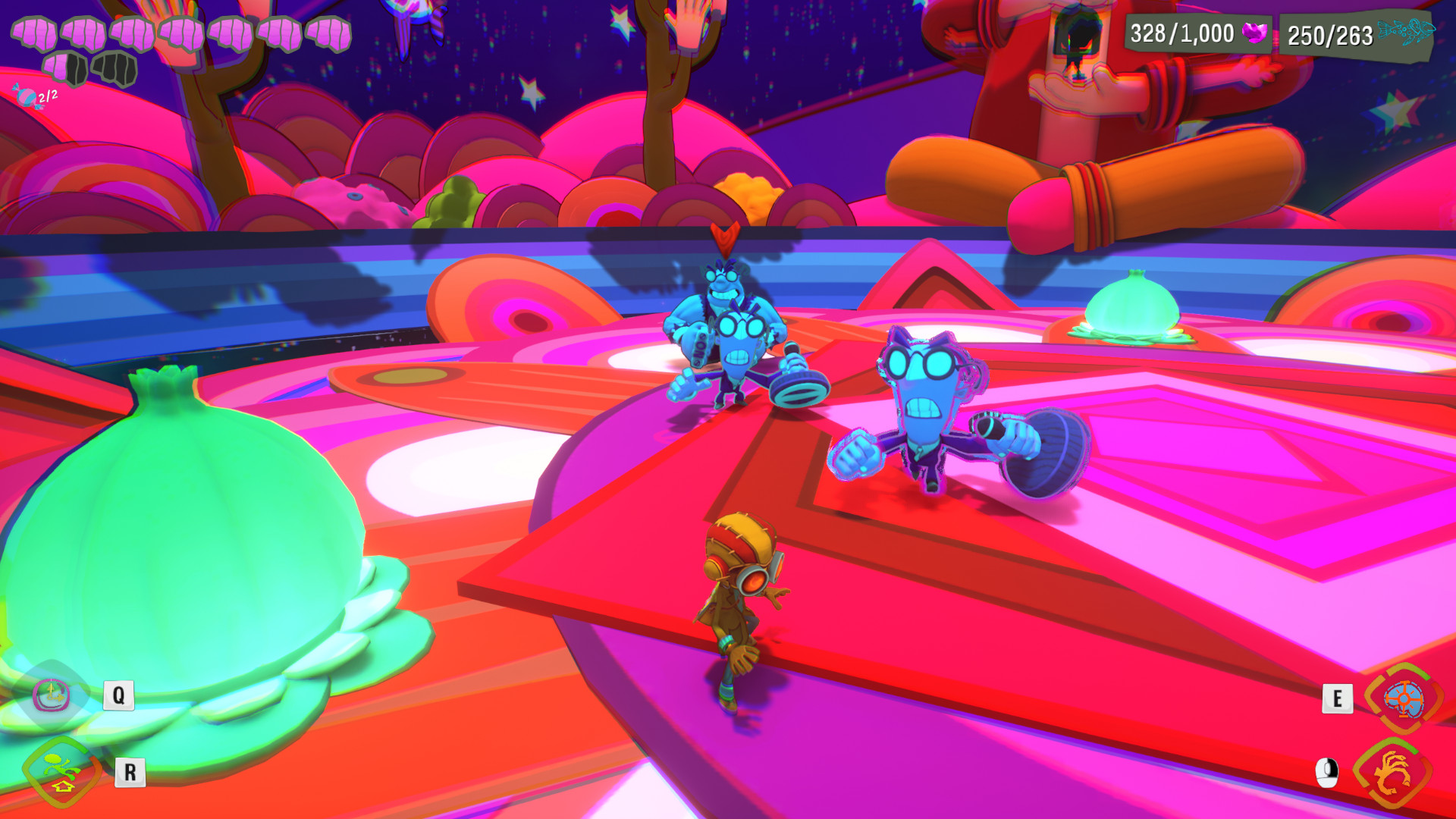
Then the massive downside of this is that of the eight psychic abilities Raz has, you can only ever have 4 “equipped” on your ability wheel at any one time and absolutely nothing in the game kills the flow quite so much as constantly having to go in and out of the abilities to select the ones you want for a given situation. Surely, SURELY, there must have been a better way of doing this?
I feel like individually all of these elements are actually pretty interesting and wacky. Janky but fun, and it is then in the writing that it is all drawn together and successfully woven into a complete narrative. Honestly, some aspects of the writing were a little predictable, but this is a game that feels like it is aimed at a younger audience and so one probably shouldn’t be expecting War and Peace. Although having said that, is it really aimed at a younger audience (and here I’d like to waggle my eyebrows at the drug sequence again)? Or is it aimed at the people who played the original Psychonauts, who now have their own children? On a very broad whole though, the plot was fun, engaging and I was very satisfied both with the set-ups presented and how it all paid off in the end.
The characters are all interesting and fun to interact with, some definitely more than others of course but that’s the same peaks and troughs of quality that I’ve mentioned in every aspect of the game thus far. Specifically, if you entered a character’s mind, they tended to be more memorable and enjoyable to interact with.
There are some rather odd decisions at work with the game though. For example, some of the mind levels deal with surprisingly grown-up topics like alcoholism, grief and even gambling addiction. It’s all done in a pretty nuanced way, but in a way it actually feels kind of odd given that some of the other levels then are just absolute mad-cap zany wonderlands.
I also personally felt like one specific minor plot point seemed really out-of-place, where Raz accidentally messes with a person’s mind, changing their character completely. This is followed by Raz fixing this change and subsequently learning it is bad to mess around inside people’s minds and change them as people…
A lesson promptly forgotten when he changes several people over the rest of the game. Granted, he’s “fixing” them in allowing them to deal with past traumas and so-on, but it still seemed like a really weird thing to include. Like it was the game trying to acknowledge that it was a bit fucked-up, but in acknowledging it, it actually drew more attention to it.
I also did not understand the purpose of some of the characters. Raz spends a lot of his time interacting with the grown-up Psychonaut agents and then the older founders of the Psychonauts as he tries to unravel the mysteries of the game. However, he also regularly interacts with a group of peers, other Psychonaut trainees his age. Upon meeting them, these teenagers immediately bully Raz and treat him like garbage, followed by one single “redemption” mission where they begin to work together. After this mission, the entire group is relegated to B-tier and play almost no role in the rest of the story. It was super, super weird in a couple of ways. One, if the game is wanting us to take it seriously (e.g. “don’t mess around with people’s minds”) then how are we supposed to warm up to these obviously nasty other kids? But more importantly, two, why the hell were these characters even there? There’s almost a dozen of them and they were actually the least memorable of the bunch because we meet them and then discard them so quickly. What was the point of it?
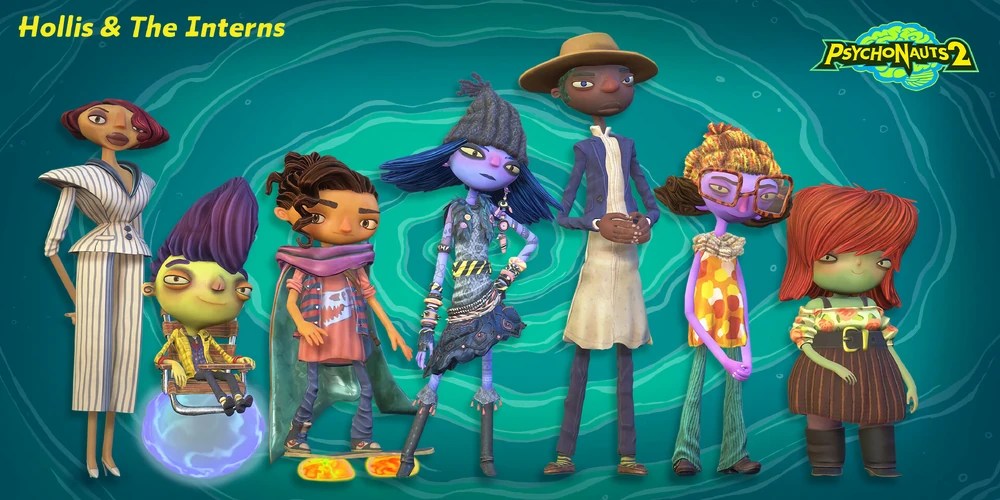
Also, just as another aside, I realise we’re NOT supposed to take Psychonauts too seriously, because just about everyone in game bullies Raz at some point, it simply feels like this is what it is asking for at times. Incidentally, it really was quite amusing how often Raz just quite happily accepts abuse from those around him and then goes off and does their side-quest anyway. I mean, one almost questions if this isn’t just masochistic at that point!
I also want to add in one final “damning” indictment of the writing in that I feel like the game is supposed to be a comedy. It’s obviously light-hearted and cheery the vast majority of the time (even if I’m making it out to be overly serious, I do need to assert that this is only a very select few moments), but despite that broadly bubbly tone, I don’t think I ever laughed during the game. I think as well this is perhaps more damning than it sounds given that reviews for Psychonauts 1 seem to suggest it was actually a very funny game, meanwhile Psychonauts 2 just fails to live up to that legacy.
I feel like overall I just quite simply didn’t GET Psychonauts 2. I enjoyed the mind-breaking stuff and was genuinely impressed by many of the visuals, themes and just the broader imagination on display. But at the same time I didn’t feel like I fully connected with the characters or the story and spent far too much of my time overthinking parts of it. Maybe again, this is because the story is designed in such a way to be played by younger audiences because honestly I actually struggled to enjoy A Hat in Time too, despite every indication that I should have found it fun. So maybe it’s me that’s the issue here.
Whatever the case though, I still feel Psychonauts 2 was an enjoyable and worthwhile experience, I simply don’t fully get the hype or why it seemed as widely loved as it was.
Rating: 72
Verdict: Sale
|
Pros |
Cons |
|
|

 MMGaming.net