
A little foreword here: I am terrible when it comes to actually publishing my reviews. Writing them is one thing, putting those finishing touches on them and putting them on the website is another thing entirely. The vast majority of this review was written around 2022-2023 for the base game of Wildermyth. I have since revisited the game following the Omenroad DLC which (released in 2024) and so have tacked on a section about that DLC specifically at the end of this review. Now let’s get to it:
The closest comparison I can come up with to Wildermyth is For the King, a strange hybrid of board-games, roguelikes, and RPG in which you control a roving band of adventurers on a quest to save the world. You level up from a group of wannabe nobodies to the toughest and baddest heroes in the land taking them across a tile-based map in order to defeat some overarching evil in a multi-chapter campaign.
Both games are trying to do something which seems sort of unintuitive, and that is they want to be a procedurally generated RPG. Given that a good RPG is all about getting invested in your characters, feeling the weight behind their decisions, and guiding them along the path you want, it helps having a solidly constructed and engaging narrative path along which your heroes can affect the outcome of events whilst simultaneously growing as characters. Unfortunately, procedural generation doesn’t exactly lend itself to either of these requirements, given that it is not supposed to be exactly structured.
Both For the King and Wildermyth attempt to bypass this by having one larger overarching narrative, which is loosely connected by a few major events that can occur at specific times (the beginning and end of a quest for example) and then have a bunch of random encounters that happen in-between, hopefully providing other interesting events to the campaign. So that takes care of the broader narrative aspect.
Where Wildermyth departs from FtK most significantly though is that it succeeded in doing something which FtK didn’t: it made me care about my characters.
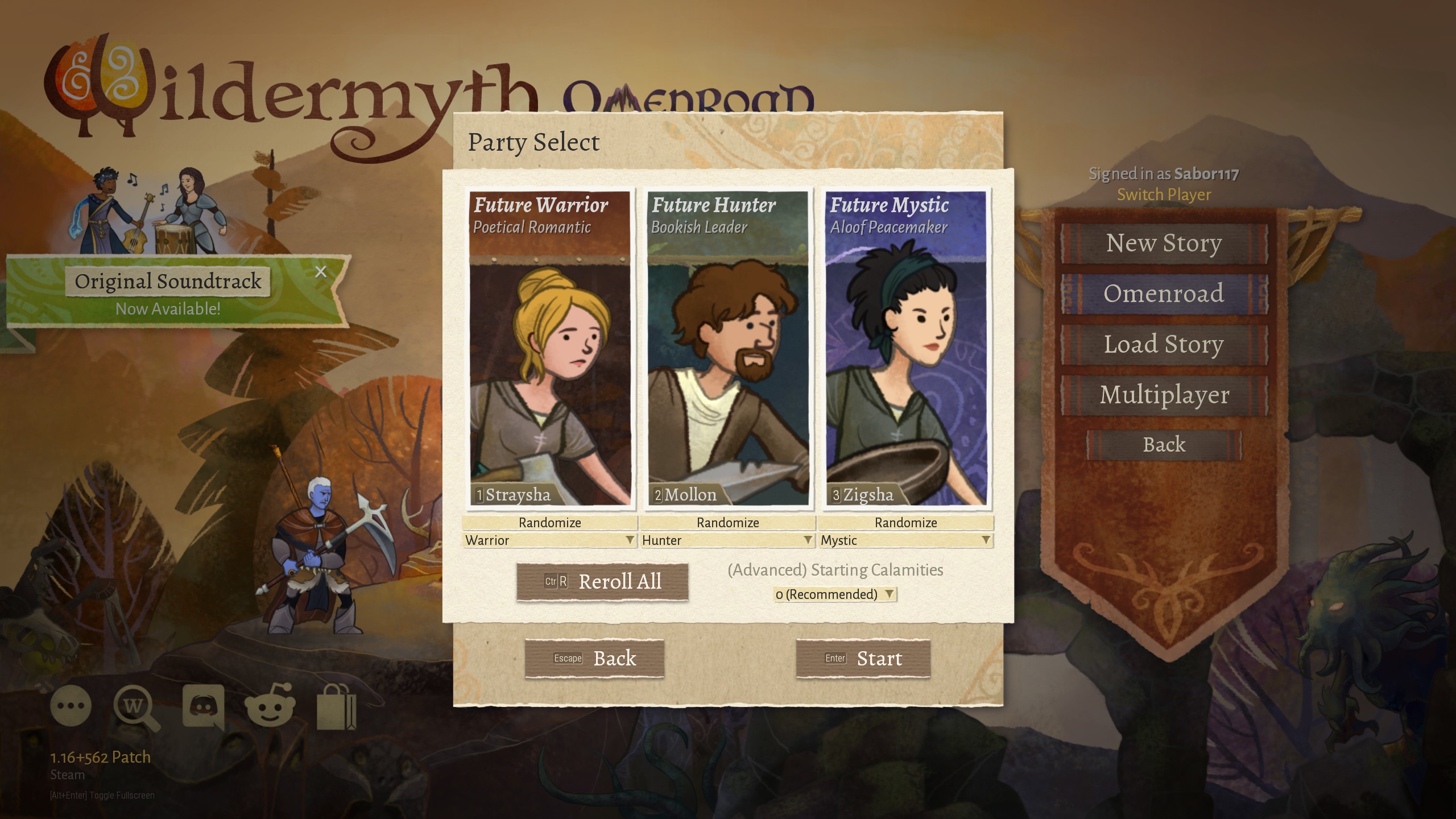
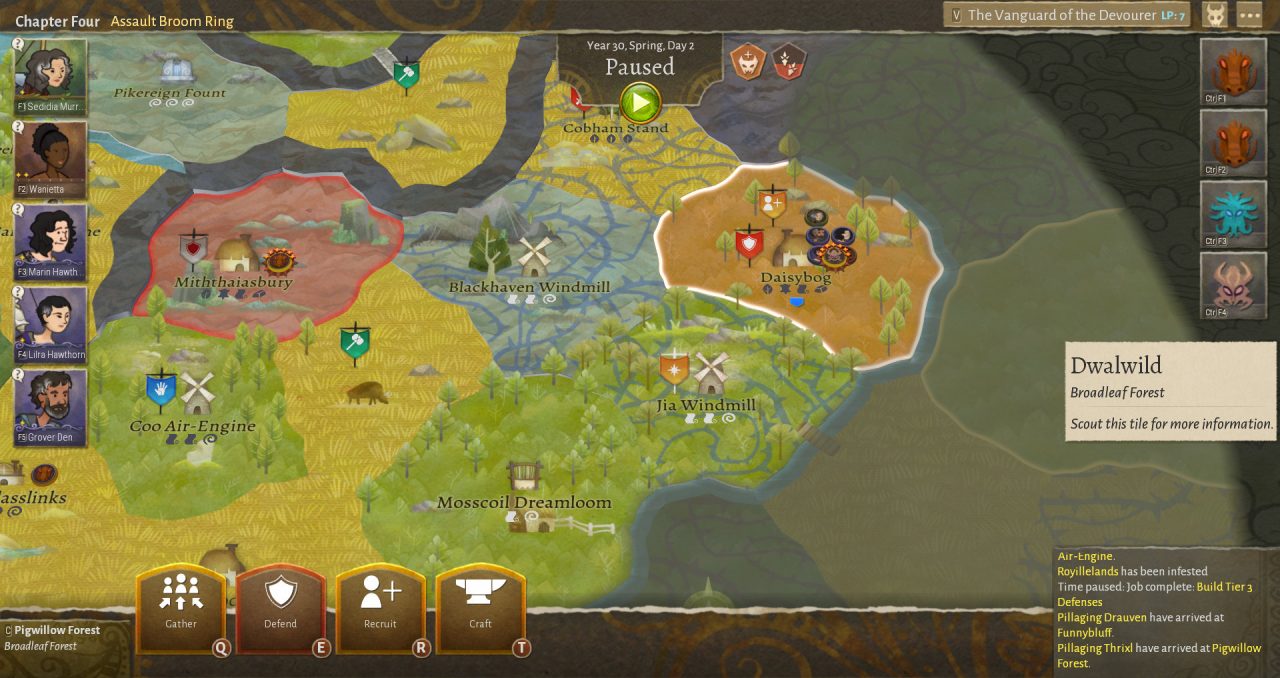
In Wildermyth you can randomly generate your party member’s appearances and names, along with then picking between one of three different classes, or you can of course customise them yourself to get your perfect self-inserts. Through a campaign, these party members will interact with each other, they will make choices, they will form relationships between each other and outside NPCs, and they will, most importantly of all, undergo changes as individuals and develop as characters. This happens in either two ways, there are combat encounters of course, but there are also text-based story events which happen scattered throughout campaigns in which you can influence the course of action by making different choices.
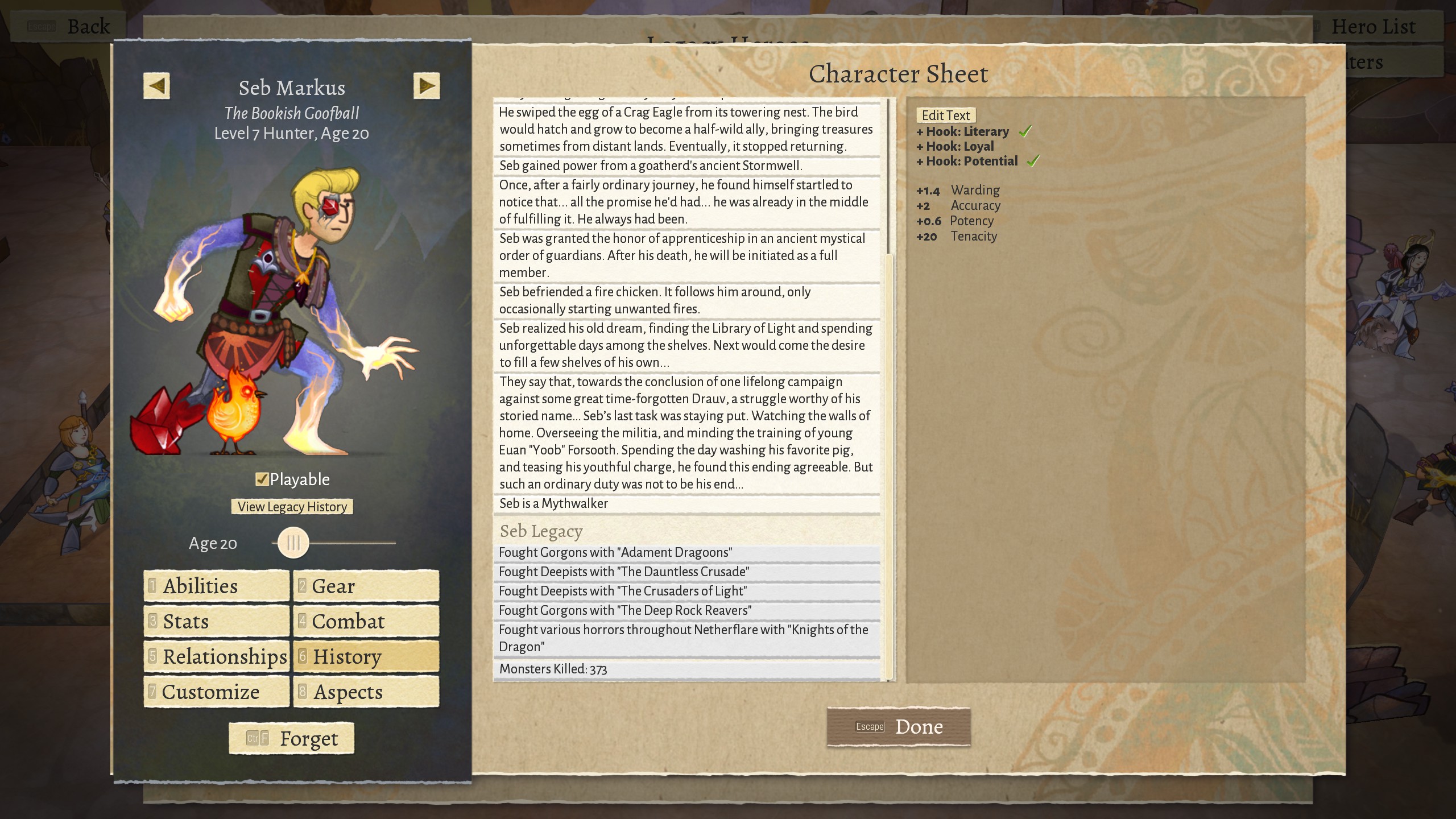
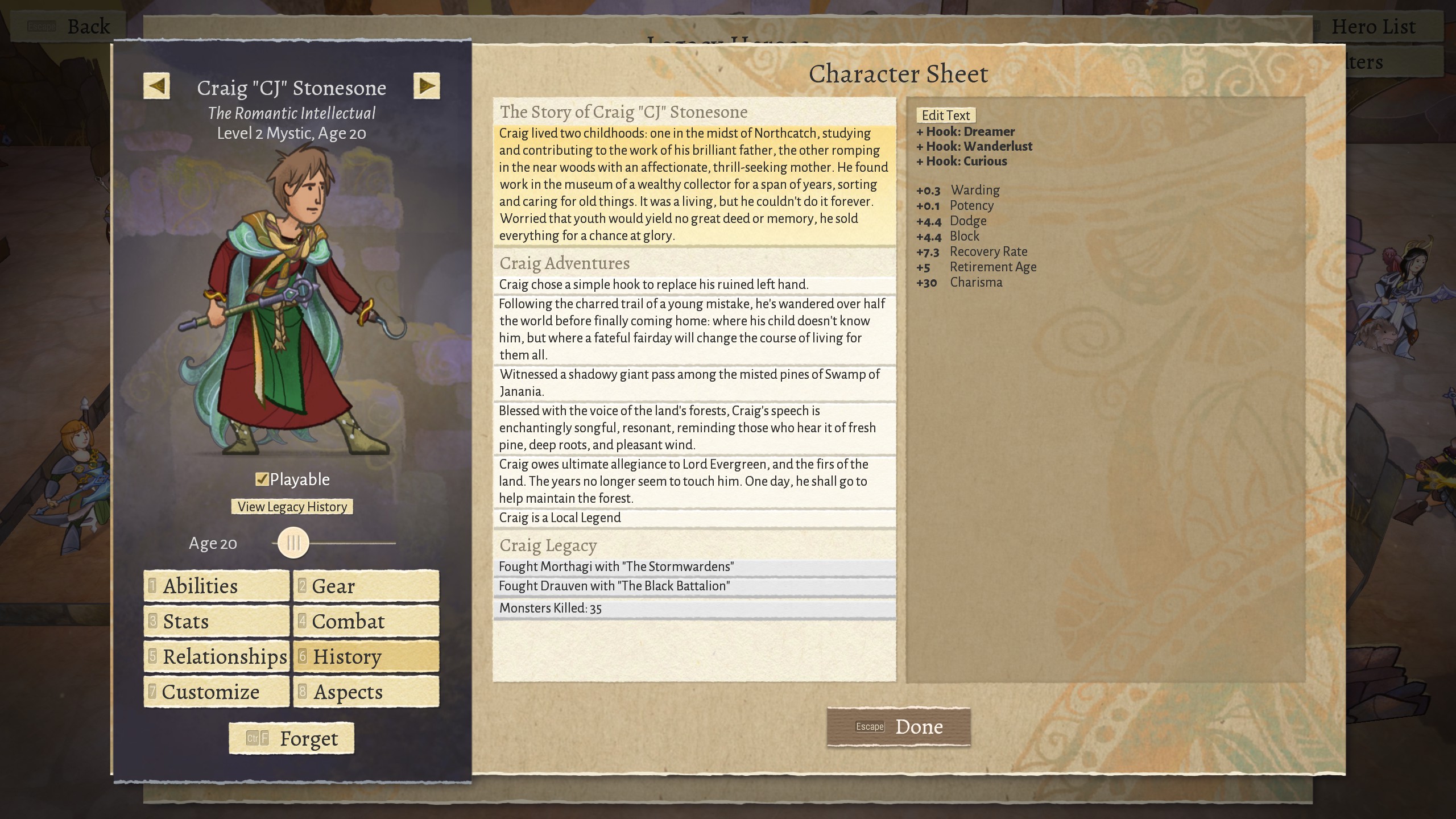
Looking back on my time in For the King, I couldn’t tell you what happened to any one of my “characters” because really there WERE no characters. No decisions, no narrative. But with Wildermyth I could regale you with dozens of stories of things which happened both in combat or in the decisions made outside of it. I could tell you about how my own self-insert became blessed by a Lightning Well shortly after getting his eye replaced by a gemstone, so over the course of two campaigns he gradually turned into a walking mineral that fired lightning bolts and more-or-less could handle whole campaigns by himself. Or the story of how my representation of my friend Craig was newly recruited into my band of heroes and almost immediately was nearly killed in a fight and so lost his hand forever… A randomly generated characted called Solius became lodged in my memory after he insulted a crow woman and ended up with a crow head. Another friend insert, Jamroll, started off as a fairly useless ranged hunter until I focused on using him to backstab enemies as a rogue and watched him single-handedly do more damage per hit than any other hero thus far. The campaign in which Eleanor had to make the decision to sacrifice herself to a lifelong disease just so she could save another hero was equally enthralling. And then there was Norlop who got the coolest bow in the game, my pal Alex becoming infused by stars (and another Alex becoming the incarnation of death). And on and on and on these memories go…
And these are just a few of the stand-out moments. There were dozens of decisions that just drew me into the game because it made me attached to the characters. With an enormous bank of possible events, which seem to have a surprisingly complex array of triggers and hidden requirements, that can happen when you finish fights, scout new zones, or even just while travelling between places, it took upwards of 20 hours before I began seeing repeats in ANY format. And even then this isn’t the end of the world because then you can see what happens if you choose a different route. Or you might have a previous encountered random event play out totally different due to a variety of hidden triggers. EVEN the random pointless traits of your characters (things like being a goofball, a loner or liking their toast burnt) might result in different dialogue and results. The level of detail and devotion to these random events is extraordinary and it makes the game absolutely sparkle.
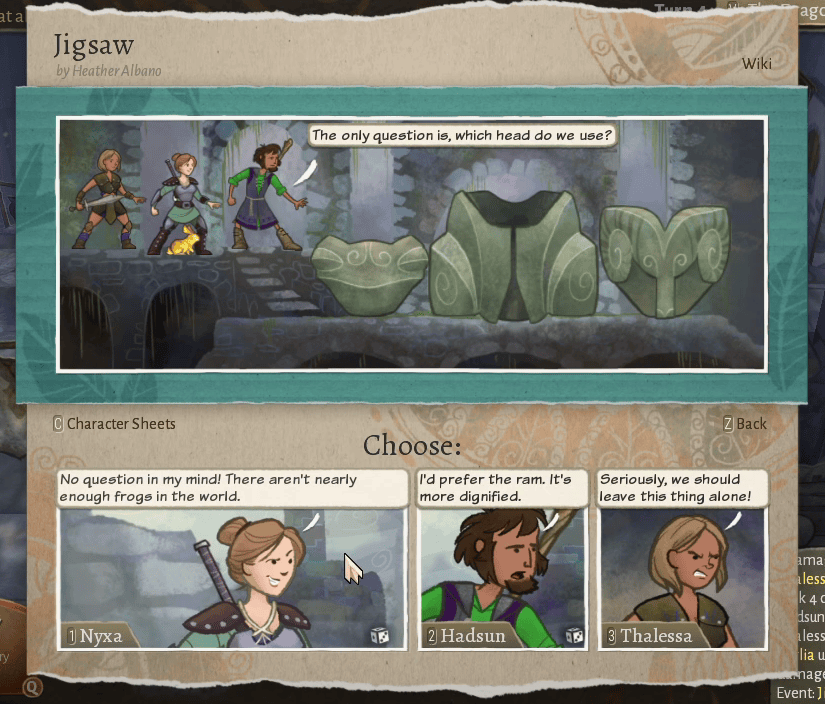
One side-note here is that every character has a set of three distinct “plot hooks”. These are things which can be triggered to occur (based on a surprisingly deep set of criteria) which cause a mini event in a campagin which this character has to go and resolve and can have quite far-reaching consequences for them (new gear, new powers, all kinds of shit). These are, individually, super cool, but I personally find it a tiiiiny bit frustrating just how esoteric the triggers are. There is an achievement, for example, to have all three hooks fulfilled in one legacy hero (meaning at LEAST two campaigns for that one hero) and setting this up feels absolutely infuriatingly difficult…
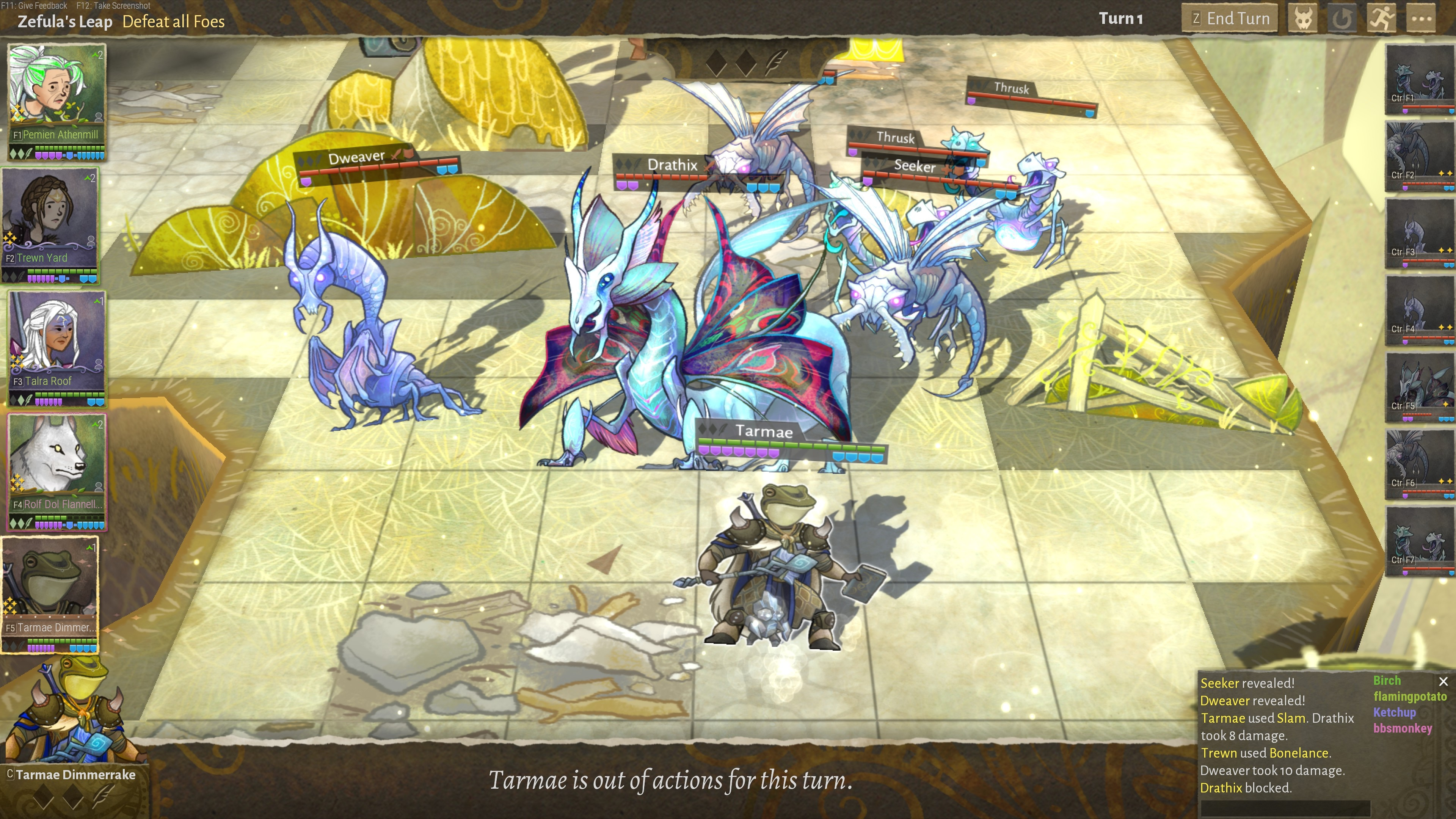
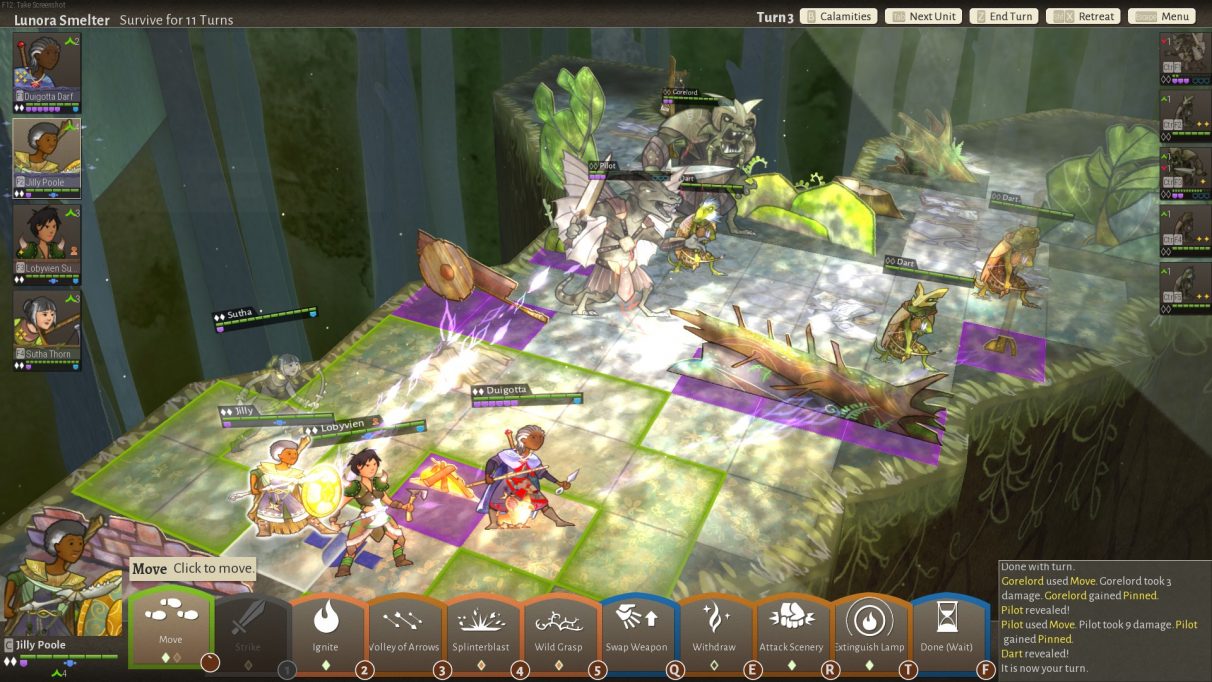
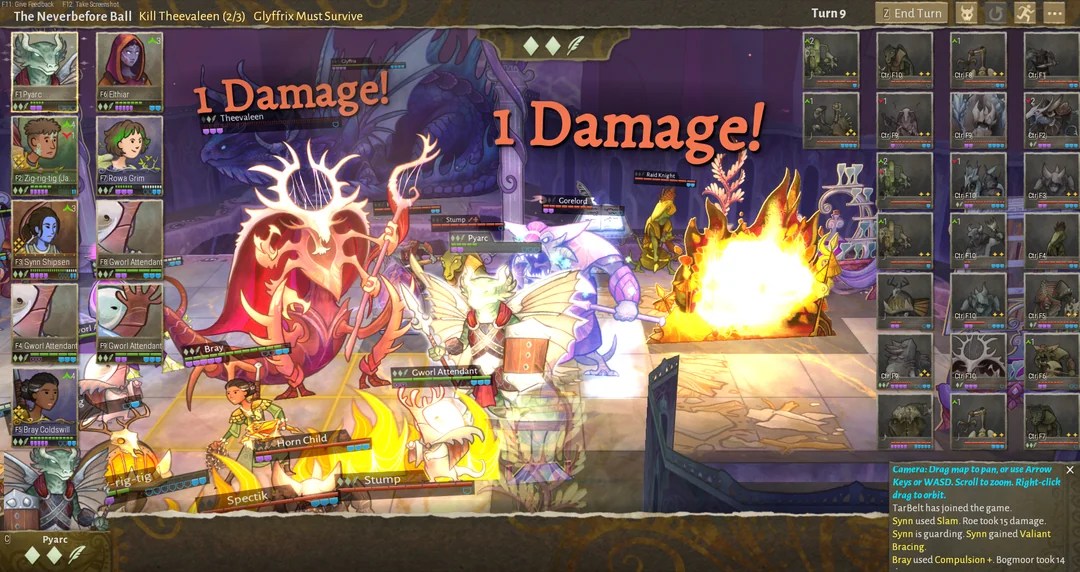
The actual gameplay mechanics happen via an overworld tile-based map, switching between that and then an X-Com-esque combat grid. The turn-based combat mirrors the random encounters in that superficially, it seems relatively straightforward, but once you get into it you realise there is a greater degree of depth on display than it initially appears.
It is a relatively familiar system though, and one which is intuitive to use. You have your Warriors who can tank hits and perform attacks of opportunity. Hunters who can move in and out of stealth mode. And then, slightly uniquely, Mages who use the magic of “infusing” objects in the combat map to gain their powers. You can equip your party with different weapons, enchant them, even find rare and exciting artifacts, upgrade their defence both against magical and physical attacks. It’s all classic fantasy and turn-based strategy stuff. Like X-Com as well, heroes can die in combat (and this leads to you choosing whether they literally die FOR REAL or whether they are permanently scarred as a result). These combat encounters are, in my experience broadly lean more towards easy than challenging, but I have had enough party wipes that I can’t claim its completely trivial. I also think that whilst the individual encounters CAN become a bit repetitive, the larger and more structured encounters (particularly those in the story campaigns) can be actually pretty fucking awesome.
In the overworld you conduct campaigns on a randomly generated map which usually goes through three phases: explore a new zone, fight those occupying it or have an encounter and then secure it. The zones secured at the end of each chapter (with each campaign being either 3 or 5 chapters in length) then provide additional resources for forging your characters better gear.
The campaigns range from either totally randomly generated ones, or a select number which actually have a proper story. While the quality of the campaign stories themselves are as a rule moderately high, I will say that some of them hit a little different. The invasion of the sentient robots or undead cult for example were both a little underwhelming in terms of what actually occurred during the story, meanwhile Eluna and the Moth, the Bones of Summer and the updated Sunswallower’s Wake campaigns all felt like the writers were really making much more effort to not only get you invested in the heroes but actually also the story of that particular campaign (a distinction which I believe I largely attribute to these having honest-to-goodness villains as opposed to just an enigmatic “opposing force” which was present in the former two).
The real kicker though, that is supposed to make you keep coming back to Wildermyth, is that any completed campaign (whether it’s fought to its conclusion or all your heroes die on iron man mode) gives you the option to transfer all of the heroes from that campaign into your “Legacy”. The Legacy is essentially a bank of heroes that you have played before, keeping all of the story events that have happened to them in a diary (as well as the physical transformations and even some stat changes). This means that you can then, in subsequent stories, recruit your “Legacy heroes” into your new party, giving them a new lease of life and adding to their story. It’s like your old friends step right out of a story book of “when we defeated the Gorgons” to come and defeat a new villain, and that’s just great.
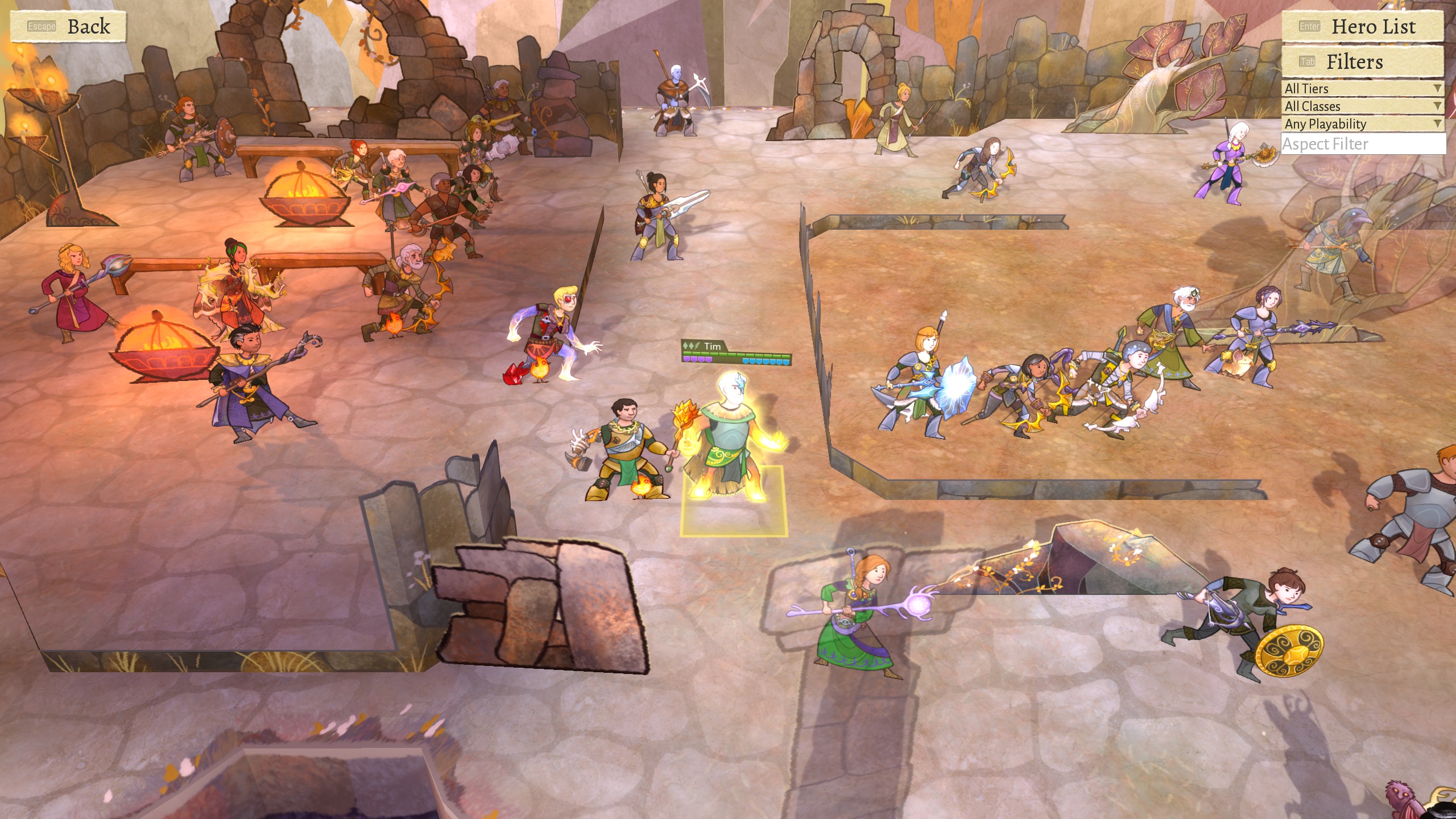
All of this means that not only do you get attached to the individual heroes from a campaign, finding favourites and being extra protective of them (or giving them the unique powerful weapons), you then have the additional excitement of getting to have them come back! It’s just great! Although admittedly some aspects which underpin all of this are not developed quite to the extent I’d like and thus a bit disappointing.
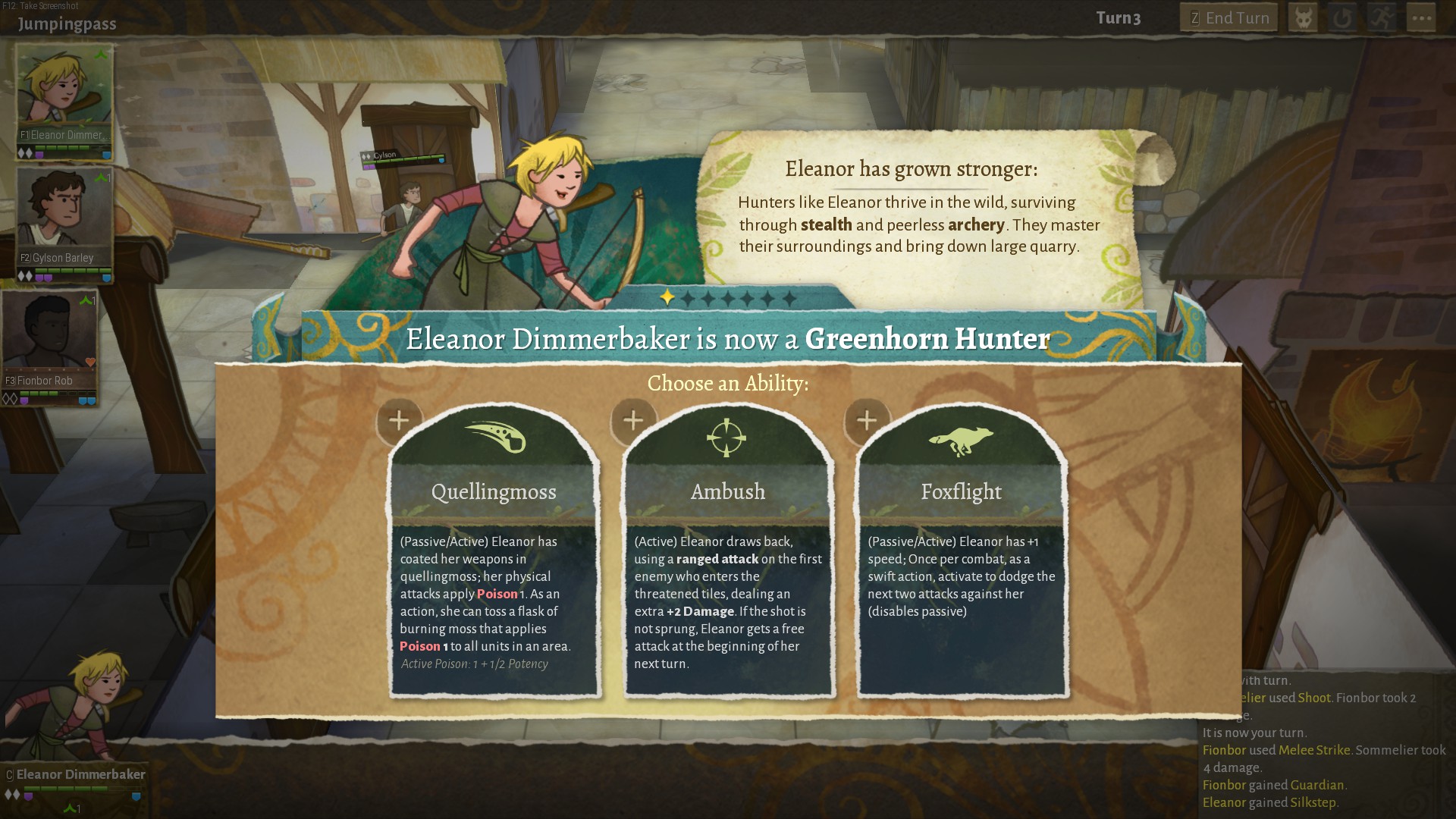
First up is just a mechanical aspect which I reckon just doesn’t work that well. Heroes can level up and each time they do they can learn a new ability, standard RPG stuff, and there is a bank of maybe 15 abilities per class with a few extra non class-specific passive buffs. However, in keeping with the procedural generation THEME, there are not skill trees as such and instead you only get to pick one of three or four randomly selected abilities each level-up. This is actually more than a little frustrating because, while none of the abilities are inherently terrible, there are some which very clearly synergise VERY well with others… But if you don’t get the synergy abilities in later levels due to RNG, well you’re now stuck with a pretty subpar hero because the synergies are almost a requirement to make a specific build work. Heroes levelled appropriately and with the right gear are never outright useless, but the difference between a hero who has a couple of abilities working in conjunction and one who doesn’t is just completely obvious, and you don’t have a huge amount of control over this.
Another of the underdeveloped issues I felt was that of incursions. Throughout the game you can build defences at liberated hexes, and the enemy will over time increase in strength until they launch an invasion which will tear across the countryside, demolishing your towns unless stopped by enough defence or intervening heroes. This gives the impression of potentially providing an additional level of strategy, but it really doesn’t get much deeper than this. Defences only provide you the ability to shoot volleys arrows (of varying strength based on the strength of the defence) during combat, so there isn’t even a choice between the style of defences or additional abilities from better ones, which was a bit of a shame to discover. It felt like there might have been room for a proper strategy aspect, maybe multiple incursions happening in a row in wave-defence type thing, but it never really happens.
And a final major character aspect that I feel is underdeveloped to the game’s detriment is the Relationships aspect of heroes. During a campaign heroes can develop one of three relationship statuses with each other: friendship, love or rivalry. All of these grow deeper over time, can flip between one and the other and actually provide in-combat buffs (for example rivals always seek to outdo the damage of their rivals, which is cool). That’s great! The other neat bit is that during a campaign, a hero can have children (I think, weirdly only with NPCs, and not other heroes they might be in love with or even get married to) who can then be brought in as a new hero in the legacy. That’s also cool!
Where there’s a downside though is that all relationships (except parent-child ones) disappear after a campaign. Personally, I feel like this is a missed trick. I would have loved to see more events where one legacy hero reconnects with another legacy hero (like two friends from an old life meeting in a new one). This is presumably so that each campaign is a blank slate and doesn’t start with the high friendship buffs, but at the same time it also gives an intransient feeling to any relationships developed, and that kind of sucks given the whole “Legacy” aspect that they’re promoting. Having one of your heroes fall madly in love with another is actually kind of cool, and it is sort of disappointing for them to subsequently have apparently no connection. Equally the parental stuff is neat the first time it happens, but in a developer Q&A they did say that the game isn’t set up for family trees, meaning that the game saying Tim is the father of Inshae Rebeltear (I didn’t pick the name) is as far as this whole component goes.
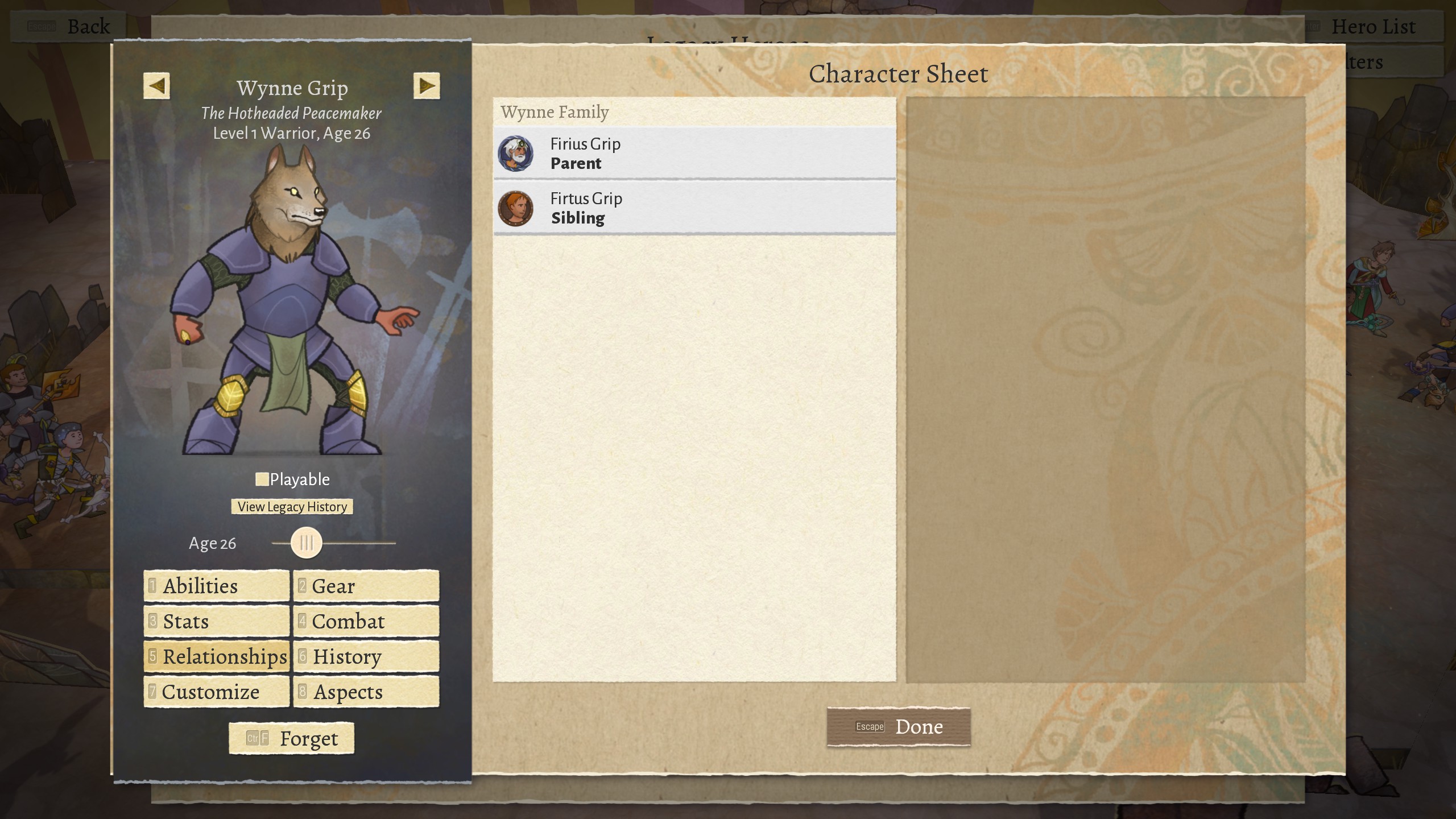
Essentially it makes the whole “relationships” bit of the game feel rather pointless. I’d have loved it if you could get full family trees developing from heroes to grandchildren and more, and I would 100% have replaced the increasing “strength” of relationships instead with permanent ones. Arguably I guess that could potentially lead to every hero being friends with every other hero if you played long enough, but I think that otherwise it actually takes away from that whole THING of “returning heroes coming back to fight again” because they don’t have the same relationships as before. Having my self-insert and my version of Tim becoming rivals in the first campaign was great fun, and so it was kinda disappointing that when they reunited in a subsequent one they barely even acknowledged each other.
I also remain somewhat unconvinced by the aging system. Heroes age throughout campaigns and have a retirement age of around 65 (I wonder how the pension is for adventuring?). In my experience by the end of Chapter 4 of a 5-chapter campaign, about 40-odd years will have passed meaning most of your original heroes then retire. This has never once been anything less than a kick in the nuts as my most powerful heroes are bundled away to retirement leaving me with the lower-level remainders of the group. On one hand, I actually really like the age progression system because it adds to that sensation of building a real story with real heroes, but on the other hand it’s just an absolute pain in the arse going into the FINAL SHOWDOWN of every campaign without your original starting line-up.
In terms of enjoyment, I think one of the major determinants of your time spent in Wildermyth is how long it takes for you to start getting bored of the encounters, which will inevitably mean when you’ve seen most of them once. At time of writing I have completed all the primary story campaigns and have seen maybe 90% of the events. At this point most of the events I see are repeats but thankfully I can still often make different choices to mix things up while trying to find the remaining unseen events. And even now it’s still occasionally capable of surprising me. Having said that, I feel like I’m pretty close to the limit of what Wildermyth can provide for me without a whole new bank of events so that I actually feel like I’m on a new adventure and not repeating them. It is actually also somewhat unfortunate, but due to the simple nature of the randomly generated events, it does cheapen them somewhat. Having my in-game version of Tim turn into a living avatar of fire was extremely cool but the effect was somewhat lessened by having no fewer than 3 other heroes in different campaigns be offered the exact same powers. But then on the other side of this, it was fucking cool when as the avatar of fire, Tim had unique dialogue options when confronted with the King of Frost (an event I had also seen before, but which now ended differently due to this unique combination).
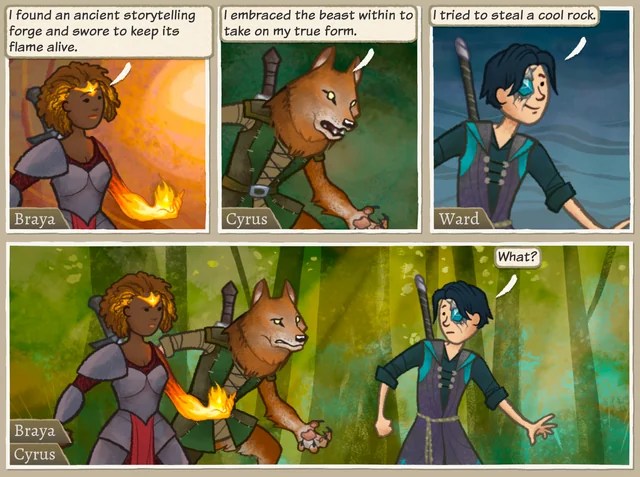
What really gets me though and raises the game in my estimation is that I feel like I can sense the passion in the writing and the mechanics. Not just the major story events but also many of the individual character decisions are all just full of heart and are genuinely exciting to play. While the heroes faces and body sizes might feel largely generic, and I’m a bit ambivalent about the 2D cut-out aesthetic, I also can see the effort and attention to detail that went into the scenery, items and clothes. The enemies as well are all wonderfully distinct and delightful to behold. It actually sort of gives me the feeling of a customisable adventure story book with pop-up characters that you could get as a child, where you would be able to decide their names before it started. And in a way, that’s a lovely, wholesome feeling. I will admit that the music of the game leaned a little bit too much into this simplistic sensation and becomes quite repetitve after 50 hours… But that’s after FIFTY HOURS, so I feel one can give them a break.
While I never completed any of the randomly generated 5 chapter campaigns, each of the fully written ones were genuinely really very cool to play through. The combat encounters were individually exciting enough, the overworld strategy was (while simplistic) diverting, the decision-making process of upgrading gear was likewise just deep enough to keep me entertained and then the literally hundreds of random encounters (which I genuinely still encounter ones I hadn’t seen before) are just absolutely fucking fabulous.
In fact, that might be the most evocative thing of the game in general, like it’s trying to just tell you some lovely fairy stories. And it does a pretty bang-up job of it.
RATING: 80/100
VERDICT: RECOMMENDED
Pros | Cons |
|
|
Omenroad DLC
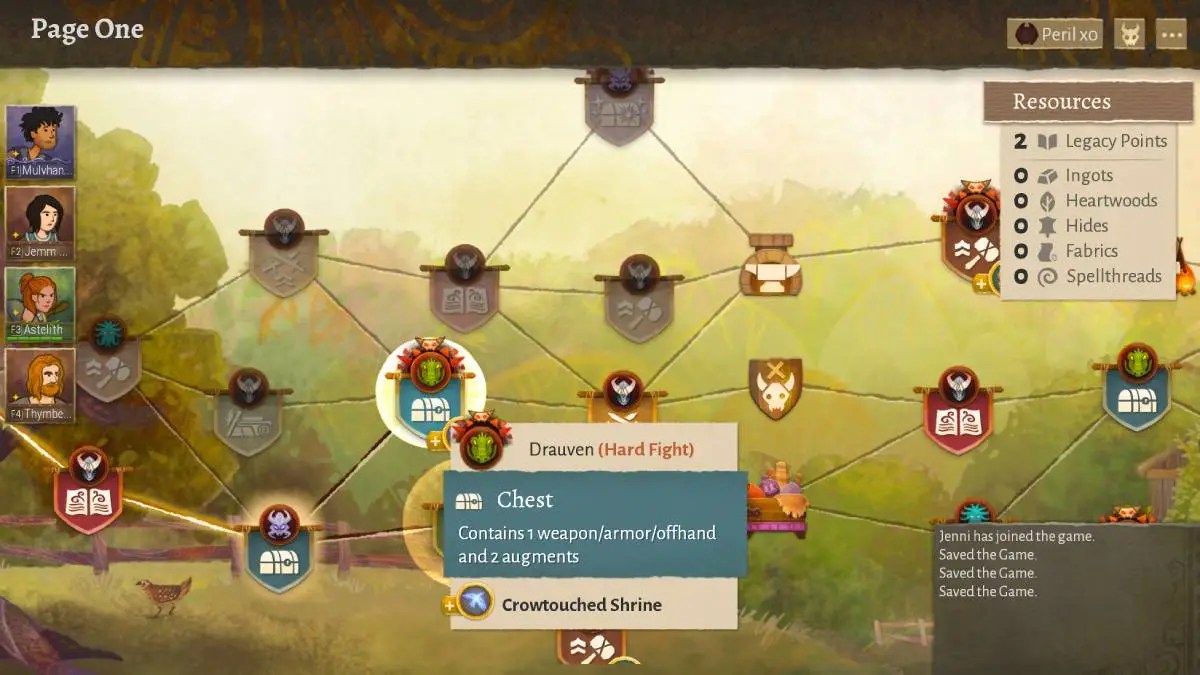
Omenroad seems to have been something of a response to some of the things I complain about in my main review. Essentially, I found the overworld elements of Wildermyth to be amongst the least convincing part of the game, little more than a map to tie the combat and story encounters together. Omenroad then takes the approach of instead of a map what you have is essentially a Slay the Spire-esque encounter tree where you progress up through the tree towards climatic fights at the end of each chapter.
These encounters include getting abilities and gear and resources which are then spent at blacksmiths and in upgrading and getting new party members. Essentially it is the original Wildermyth experience but streamlined into purely the encounters.
It also comes with its own curated campaign the Walk in the Unlight campaign which follows the same format I just described but has a fully fleshed out story, as opposed to the random encounters of the standard roguelite aspect.
Like I say, the actual roguelite tree element of this seems to be an attempt to streamline the whole Wildermyth experience and remove the slower, less developed map-based segments. Unfortunately I don’t think this was a step in the right direction. Now with a tree of encounters you are constantly playing one encounter after the next and this REALLY drives home the repetitiveness I mentioned in my main review. The real highlight of Wildermyth is the random “plot” encounters, and less-so the combat. If the former are basically completely removed then it really makes it much more clear how regularly I was just doing the same thing in every combat encounter.
At the same time, you might say that a roguelite tree might speed up the process. But no, a full run of Omenroad still seems to take upwards of 4 hours and that means it isn’t capturing the best aspects of a roguelite. What makes roguelites particularly engaging mechanically is failing a run, dusting yourself off and immediately going again, a few times in an evening. With Omenroad, the length of each run means this just isn’t an option.
The ONE thing I think it does have going for it is the new boss encounters. These are much more spectacular and much more memorable than the vast majority of the base-game encounters and it seems clear that this is where most of the effort went but this is really not enough to carry everything else. It’s just a shame that it means this is a much more mechanically-focused DLC for a game which thrives outside of its mechanics.
But what about Walk in the Unlight then? Unfortunately, I think this might also be one of the weakest of Wildermyth campaigns in terms of story. Fitting in with the overall DLC theme, the Walk in the Unlight takes a few heroes and essentially puts them into a fae multiverse type of deal where they can experience snippets and elements of other past campaigns. All of those previous main-game campaigns (and stories) you played were all sort of a multiverse of events for your heroes to now explore whilst being led by some strange immortal fae lady on a quest from the Dragon who rules this crossroads dimension.
Putting aside the fact that I don’t really like multiverse stuff in general, quite simply a lot of the whole plot was just a bloody confused mess. There’s sort of implied to be two sides, a God who used to rule the fae dimension and the dragon who does now. And your guide seems to serve both? Or neither and is only out for herself? And she’s taking you to meet the dragon to… Kill him? Or protect him? Or to backstab you and protect him?
The story is told in dribs and drabs in story segments peppered about the combat encounters, but its also told in an extremely disjointed way with flashbacks and callbacks and your guide revealing things piecemeal (and even splitting the reveals up with more flashbacks).
To be completely frank, I went into the final encounter with the dragon at the end of the game completely unclear if I was there to kill him, if I could expect to be betrayed or something else. So when the game surprised me there, let me be clear, it’s not because it was trying to be clever or elusive. Instead it was just really badly conveyed what the fuck was going on…
Personally I put a lot of this on the style of the head-writer Douglas Austin. For the previous campaigns I think he was constrained a bit more, but here it really does feel like he just completely lost track of what he was trying to do. He also has a habit, definitely present in the other campaigns, of blending words in a very unusual way. He will say stuff like “and they were beset upon by fireflythings”, “they pondertreaded through the misty murk” or “they harkend upon the great stumblerooted forest”…
Basically he will mash two words together in a way that, I will admit, is surprisingly evocative and creative. They, mostly, make sense in context and give the stories a rather whimsical and “fairy-tale” vibe (fitting with what I said for the main game). With Omenroad, it felt like this was dialed up a bit further and this went from “whimsical” to “childish and annoying”. Smashing two random words together to make something somewhat work is cool at times, but not a literary trick to use in EVERY BLOODY SENTENCE.
Overall, Omenroad was a disppointment compared to the main game, and whilst I would maintain the Walk in the Unlight campaign was overall worth it. I don’t think I’d even recommend that wholeheartedly.


